


Table of Contents
I’ve used many mics over the years, but the Beyerdynamic M88 TG keeps impressing me. It’s a versatile workhorse that’s found its way into many of my recording setups.
This dynamic mic shines on vocals, bass drums, and in the studio.
Its hypercardioid pattern helps isolate the sound source, which is brilliant for home recording where acoustics might not be ideal.
- It captures the punch of kick drums without needing much processing.
- The M88 TG’s extended frequency range gives vocals a lovely presence boost. It’s subtle but effective.
- The bass response is exceptional too, adding depth to recordings without muddying things up.
I appreciate its rugged build. It feels solid in hand and has withstood years of use in my studio. The included mic clip and storage bag are nice touches.
Bottom line
For home studio musicians looking to level up their recordings, the M88 TG is a solid investment.
It’s versatile enough to handle various sources and built to last. If you’re after professional-quality sound without breaking the bank, this mic is worth considering. Give it a try – your recordings might thank you.
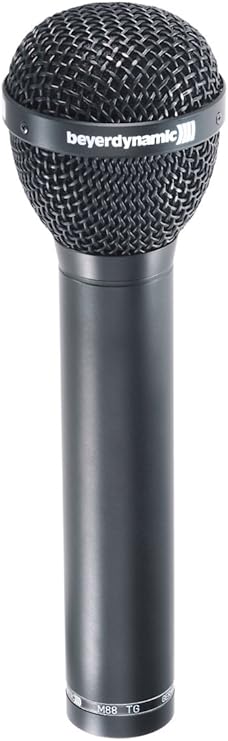 Beyerdynamic M88 TG Dynamic Microphone
 The Beyerdynamic M88 TG is a dynamic microphone with a hypercardioid pattern, ideal for vocals, bass drums, and studio recording. It features an extended frequency range for enhanced clarity and rich bass response, making it suitable for various instruments.
- Rich, full-bodied sound
- Exceptional clarity for a dynamic mic
- Handles high sound pressure levels like a champ
- Versatile - great for vocals and instruments
- Built tough for studio and stage use
- Pricey compared to some other dynamic mics
- Can be sensitive to plosives
- Might be overkill for basic home recording setups
Overview
I’ve been using the M88 TG for years, and it’s a true workhorse. This mic shines on vocals, bass drums, and in the studio.
It’s built to last and comes with a clip and storage bag. The integrated hum-buck coil is a nice touch, reducing interference.
One downside: it’s a bit pricey. But for the quality, it’s worth every penny. I’ve used it on countless recordings, and it never disappoints.
Audio quality
I’ve used the M88 TG for years, and its audio quality never fails to impress. This mic captures sound with incredible clarity and precision.
The extended frequency range is a standout feature. It offers a soft presence boost that adds just the right touch of brilliance to vocals and instruments.
But what really shines is the bass reproduction. It’s exceptional, delivering a rich, full-bodied low-end that’s hard to find in other mics.
I’ve found the M88 TG particularly stellar for:
- Kick drums – It captures that tight “thump” perfectly. The low-mass diaphragm is key here. It responds quickly to the complex sound of a kick drum.
- Brass instruments – The fast transient response is ideal
- Vocals – It captures the nuances of a voice with clarity and warmth. The soft presence boost adds a touch of air to the vocals without being harsh.
Its hypercardioid pattern brilliantly rejects off-axis noise. The M88 TG’s low-mass diaphragm captures fast transients with ease.
One thing to note: it’s quite sensitive. This is great for capturing detail, but it might pick up unwanted noise in less-than-ideal recording spaces. Because of its sensitivity to plosives, I would recommend a pop filter for close-mic vocal work.
Overall, the M88 TG’s audio reproduction is top-notch. It’s a versatile workhorse that delivers professional-grade sound quality.
Durability and build quality
The build quality is top-notch too. It feels solid and well-made, ready to withstand the rigours of life on the road or in a busy studio.
Its metal body feels solid in my hand. I’ve dropped it a few times, and it still works perfectly. The mic’s build quality is top-notch. It’s made in Germany with high-quality materials.
The brass construction gives it a nice weight and durability. I’ve found it can withstand high sound pressure levels without distortion.
One downside is that it’s a bit heavy for long vocal sessions. But this weight is part of what makes it so sturdy.
Versatility
I’ve tested this mic in noisy environments and cramped rehearsal spaces.
Its hypercardioid pattern works wonders, blocking out unwanted sounds from the sides and rear. This makes it great for live gigs or busy home studios.
While it’s a bit pricey, the versatility and sound quality make it worth considering for serious home recordists.
Value for money
The M88 TG isn’t cheap. It’s an investment and might be more than some home recordists need.
But for the quality, it’s worth every penny. I’ve used it on countless recordings, and it never disappoints.
Conclusion – Is the M88 TG worth it?
I’ve put this mic through its paces, and I’m impressed. The M88 TG shines on vocals and bass drums. Its rich sound and clarity are top-notch. I love how it brings out the best in singers’ voices.
Rich, full-bodied sound
Exceptional clarity for a dynamic mic
Handles high sound pressure levels like a champ
Versatile – great for vocals and instruments
Built tough for studio and stage use
Pricey compared to some other dynamic mics
Can be sensitive to plosives
Might be overkill for basic home recording setups
For home studio use, it’s a solid choice. The hypercardioid pattern helps reduce room noise. This is great for less-than-perfect recording spaces.
Is it worth the investment? If you’re serious about your recordings, yes. The M88 TG’s versatility and sound quality make it a valuable tool. It’ll help take your home demos to the next level.
Scoring
| Criterion | Score (out of 10) | Weight (%) | Weighted Score |
|---|---|---|---|
| Sound Quality | 9 | 30% | 2.70 |
| Ease of Use | 8 | 20% | 1.60 |
| Features | 8 | 15% | 1.20 |
| Build Quality | 9 | 15% | 1.35 |
| Value for Money | 7 | 10% | 0.70 |
| Compatibility | 8 | 5% | 0.40 |
| Innovation | 7 | 5% | 0.35 |
| Total Score | 100% | 8.3 |
Frequently asked questions
The M88 TG has a smooth, extended frequency range. It gives vocals a soft presence boost and great bass response. This combo adds warmth and clarity to voices. It’s especially good for deeper voices or singers who need more low-end oomph.
The M88 TG shines in several areas:
- Live vocals
- Bass drum recording
- Studio vocal sessions
- Guitar amp miking
Its hypercardioid pattern helps reject off-axis sounds. This makes it great for noisy stages or busy studios.
Yes, the M88 TG can hold its own against the SM7B. Both are top-notch dynamic mics.
The M88 TG has a brighter top end and more low-mid presence.
The SM7B is known for its flat response. Which is better depends on the voice and personal taste.
The M88 TG stands out in a few ways:
- Rich low end without muddiness
- Smooth high-frequency response
- Natural-sounding midrange
- High sensitivity for a dynamic mic
It’s not as dark as some competitors. It captures more air and detail in the upper frequencies.
The M88 TG has a moderate impedance. This makes it play well with most preamps.
It doesn’t need as much gain as some other dynamic mics. You’ll get a strong, clean signal even with budget interfaces.
