


Table of Contents
I’ve been testing out microphones for two decades now, and the Shure SM7B is one of the best I’ve handled.
Many pros still choose it, even though it’s been around since the 1970s. I recently got my hands on one to test it out. It’s like the Swiss Army knife of mics, versatile enough for vocals, podcasts, and even some instruments.
The SM7B’s sound is warm and smooth, with a wide frequency range that allows it to handle both deep voices and high notes with ease. I found it particularly good at capturing the nuances in vocal performances.
One thing I love about this mic is its build quality. It’s solid and sturdy, like a tank. You could probably drop it, and it’d still work fine (but please don’t try that at home).
The SM7B has some neat features:
- A built-in pop filter
- A shock mount to reduce vibrations
- Bass roll-off and presence boost controls
These features make it great for home studios where you might not have perfect acoustics.
Bottom line
If you’re a musician looking to up your home recording game, the SM7B is a solid choice. It’s pricey, but it’s an investment that’ll serve you well for years.
The sound quality is top-notch, and its versatility means you can use it for singing, speaking, and a range of instruments.
It’s especially good if you’re after that warm, professional radio sound. Just remember, you’ll need a good preamp to get the best out of it. But if you’re serious about your recordings, this mic is definitely worth considering.
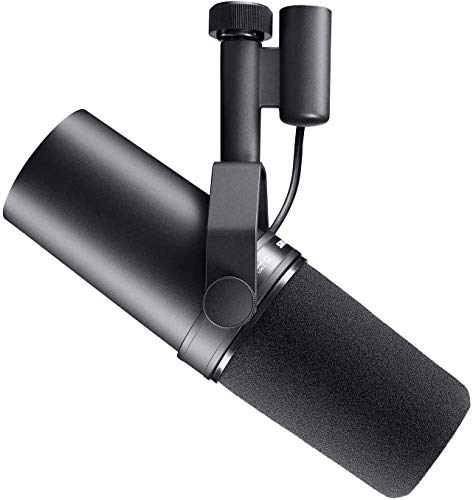 Shure SM7B Vocal Dynamic Microphone
 The Shure SM7B is a versatile dynamic microphone known for its warm sound and wide frequency range, making it ideal for vocals and various instruments. Its robust build includes a built-in pop filter, shock mount, and controls for bass roll-off and presence boost, ensuring excellent performance in untreated rooms.
- Rejects room reflections naturally in untreated spaces
- Handles high SPLs without distortion (180dB)
- Smooth, warm tone that flatters most voices without EQ
- Cardioid pattern eliminates bleed effectively
- Sturdy build quality
- Requires high-gain preamp or cloudlifter
- Less detailed than condensers in treated rooms
- Heavier than typical studio mics
- No switchable polar patterns
Overview
I’ve used countless mics in my 20-year career, but the SM7B always impresses me. It’s a workhorse in studios worldwide, capturing vocals with amazing clarity and warmth.
The SM7B shines for both singing and speech, with a cardioid pattern that brilliantly rejects off-axis sounds, helping to isolate the voice from room noise.
What I love:
- Smooth, flat frequency response
- Built-in pop filter and shock mount
- Rugged build quality
For home studios, the SM7B is a top choice, as it’s forgiving of untreated rooms and delivers pro-quality sound.
Audio quality
The SM7B captures vocals with incredible clarity and warmth. Its cardioid pattern rejects off-axis sounds, making it perfect for home setups with untreated rooms. It also has built-in pop filtering and shock mounting.
These features reduce plosives and smooth out harsh sibilance and tame plosives naturally, reducing the need for excessive EQ or de-essing in post.
The mic needs a lot of gain, so a good preamp is crucial. I recommend at least 60dB of clean gain to get that iconic SM7B sound.
One thing to note – this mic needs a beefy preamp. You’ll want at least 60dB of clean gain to get that iconic SM7B sound. A Cloudlifter or similar inline booster works wonders if your interface lacks juice.
It’s versatile too and not just for voices. I’ve used it on guitar cabs, brass, and even drums. The sound is always smooth and natural.
The bass roll-off and presence boost controls add flexibility.
Durability and build quality
The SM7B is built like a tank. I’ve used this mic for years in my studio, and it’s taken quite a beating. Its metal body is tough as nails. You could drop it on stage and it’d likely survive unscathed.
The internal components are well-protected. Shure’s made sure nothing rattles or comes loose inside. The yoke mount is sturdy and lets you position the mic easily.
One brilliant feature is the detachable windscreen. It’s easy to clean or replace if needed. The mic’s finish resists scratches and wear, keeping it looking smart even after heavy use.
I’m impressed by how Shure’s managed to make such a robust mic without it being too heavy. It’s solid without being a burden to mount or move around.
Ease of use
I’ve been using the SM7B for years in my home studio. It’s a real workhorse, shining for vocals, podcasts, and streaming. Its wide frequency range captures voices with warmth and clarity.
While it’s a brilliant mic, it’s not without its quirks. The need for high gain can be a challenge if you don’t have the right preamp, and its weight means you can’t just stick it on any old stand.
However, once you get it right, the SM7B is magic. Just be prepared to invest in some good supporting gear to make it sing.
Special features
The SM7B includes a professional XLR connection, which is solid and sturdy, ensuring a secure link to your audio interface or mixer.
This pro-grade connection offers balanced audio signal, low noise transmission, and compatibility with most studio gear.
The XLR connection helps reject electromagnetic interference, resulting in cleaner recordings, even in less-than-ideal environments.
The mic doesn’t need phantom power, which is handy, but remember, you’ll need a preamp with lots of gain to get the best out of it.
Value for money
The SM7B isn’t cheap, but its quality justifies the cost:
I’ve had mine for over a decade, and it still sounds as good as day one. For pros, it’s an investment that pays off. It’s not just a mic; it’s a tool that helps create better recordings.
Is the Shure SM7B worth it?
I’ve tested countless mics over the years, and the SM7B stands out as a top choice for home studios. It captures vocals with warmth and clarity, and the build quality is rock-solid too.
Fantastic sound quality for vocals and speech
Sturdy build – it’ll last for ages
Great at rejecting off-axis noise
Smooth, warm tone that flatters most voices
Versatile for various recording tasks
Needs a lot of gain – at least 60dB
Quite heavy, so you’ll need a sturdy mic stand
Pricey compared to some alternatives
No built-in pop filter (though it comes with a windscreen)
This mic shines on both singing and speech, taming harsh sounds without losing detail.
While the price might seem steep at first, it’s an investment that pays off, and you won’t need to upgrade for years.
For serious home recordists, the SM7B is a brilliant pick that will take your demos to the next level. If you’re ready to step up your game, go for it.
Scoring
| Criterion | Score (out of 10) | Weight (%) | Weighted Score |
|---|---|---|---|
| Sound Quality | 10 | 30% | 3.00 |
| Ease of Use | 8 | 20% | 1.60 |
| Features | 9 | 15% | 1.35 |
| Build Quality | 10 | 15% | 1.50 |
| Value for Money | 8 | 10% | 0.80 |
| Compatibility | 9 | 5% | 0.45 |
| Innovation | 7 | 5% | 0.35 |
| Total Score | 100% | 9.05 |
Frequently asked questions
The SM7B has a smooth, warm sound that flatters most voices, and its cardioid pattern rejects off-axis noise well, helping to isolate the vocal in a mix. I find it especially good for:
- Rock and pop vocals
- Scream vocals
- Voice-over work
- Podcasting
The built-in pop filter and shock mount are handy too, cutting down on plosives and handling noise.
I usually place the SM7B about 2-3 inches from the mouth, which gives a nice balance of clarity and warmth.
For softer vocals, you can get closer, while for loud rock vocals, backing off a bit is advisable.
The key is to experiment, as every voice is different. Find what works best for you.
Many famous artists have used the SM7B, including Michael Jackson (for ‘Thriller’), Serj Tankian (System of a Down), James Hetfield (Metallica), and Sheryl Crow.
It’s also a favourite in radio stations worldwide. The SM7B has been around since the 1970s, and its sound has shaped countless hit records.
