


Table of Contents
Are you looking to improve your home demos but worried that a good microphone will cost too much? Good news – you don’t need to spend a fortune to get professional-quality sound.
Here are the top 5 budget microphones that will make your recordings shine without emptying your wallet.
Quick comparison
| Microphone | Type | Price | Best For |
|---|---|---|---|
| Audio-Technica AT2020 | Condenser | £89 / $119 | All rounder in home studios |
| Shure SM57 | Dynamic | £99 / $119 | Guitar amps & drums |
| Shure SM58 | Dynamic | £99 / $119 | Live & studio vocals |
| AKG P120 | Condenser | £99 / $129 | Warm vocal tone |
| MXL 990 | Condenser | £59 / $79 | Budget vocal warmth |
1. Audio-Technica AT2020
Best overall for home studios
The Audio-Technica AT2020 delivers detailed, accurate sound that rivals microphones costing twice as much. This large-diaphragm condenser microphone captures vocal recordings and acoustic instruments with exceptional clarity.
The mic’s design includes a custom-engineered low-mass diaphragm that provides extended frequency response and superior transient response. This means your recordings will have a crisp, natural sound that rivals more expensive microphones.
 Audio-Technica AT2020 Cardioid Condenser Microphone
 Known for its affordability and high-quality audio, the AT2020 captures vocals and instruments with clarity and detail, making it an excellent choice for musicians recording at home.
- Clear, crisp sound quality delivers detailed vocal recordings
- Sturdy metal build withstands regular studio use
- Excellent value for money in budget category
- Versatile for vocals, acoustic guitar, and room miking
- Low self-noise ensures clean recordings
- Requires audio interface with phantom power
- No pop shield included (essential for vocal recordings)
- Bright tone may need EQ adjustments for some voices
- No shock mount included with basic stand mount
- Sensitive to room noise in untreated spaces
The custom-engineered low-mass diaphragm provides extended frequency response and superior transient response. High SPL handling (144dB) and wide dynamic range capture both soft and loud sources without distortion.
The cardioid polar pattern reduces pickup from sides and rear, improving isolation of desired sound source. This studio mic requires an audio interface with 48V phantom power but outperforms entry-level USB microphones significantly.
Technical specifications
| Specification | Details |
|---|---|
| Type | Large-diaphragm condenser microphone |
| Polar Pattern | Cardioid |
| Frequency Response | 20Hz – 20kHz |
| Max SPL | 144dB |
| Impedance | 100 ohms |
| Self-Noise | 20dB-A |
| Connector | XLR |
| Requires Phantom Power | Yes (48V) |
Key features:
- Extended frequency response range captures full tonal spectrum
- Low self-noise (20dB-A) ensures clean recordings
- Handles high SPL without distortion
- All-metal construction withstands daily use
- Pivoting stand mount included
Price: £89 / $119
Best for: Singer-songwriters recording vocals and acoustic instruments, home recording enthusiasts needing versatile performance.
2. Shure SM57
The Shure SM57 stands as the industry-standard dynamic mic for instrument recording. This legendary microphone has captured countless rock ‘n’ roll guitar amps and aggressive drum sounds in professional studios worldwide for over 50 years.
 Shure SM57 Dynamic Microphone
 The Shure SM57 is a dynamic microphone renowned for its versatility and durability, making it ideal for instruments and vocals. With a frequency response of 40 Hz to 15 kHz and the ability to handle high sound pressure levels, it excels in studio and live settings, delivering clear, accurate sound reproduction without needing phantom power.
- Versatile for electric guitars, drums, and brass
- Clear and accurate sound reproduction with presence boost
- Exceptional feedback rejection for loud sources
- Professional-quality recordings at budget price
- Virtually indestructible metal construction
- Limited high-frequency response (15kHz ceiling)
- Requires strong preamp gain for quiet sources
- Not ideal for all vocal types (better for instruments)
- Can pick up handling noise without shock mount
- Frequency response less suited to acoustic instruments
As a dynamic mic, the SM57 handles extreme sound pressure levels (180dB SPL) without distortion. Point it at a cranked Marshall stack or aggressive snare drum and it captures every detail cleanly. The cardioid pattern provides excellent feedback rejection for loud sources.
The uniform cardioid pattern isolates sound sources whilst rejecting background noise. The contoured frequency response with presence peak adds punch to guitars and snare drums. Unlike condenser microphones, it requires no phantom power and works with any audio interface.
Technical specifications
| Specification | Details |
|---|---|
| Type | Dynamic microphone |
| Polar Pattern | Cardioid |
| Frequency Response | 40Hz – 15kHz |
| Max SPL | 180dB |
| Impedance | 150 ohms |
| Sensitivity | -56.0 dBV/Pa |
| Connector | XLR |
| Requires Phantom Power | No |
Key features:
- Handles 180dB SPL without distortion
- Cardioid pattern with excellent feedback rejection
- Presence peak enhances guitar amps and drums
- Legendary durability withstands decades of use
- Works without phantom power
Price: £99 / $119
Best for: Recording electric guitar cabinets, snare drums, brass instruments, home studios needing indestructible reliability.
3. Shure SM58
The Shure SM58 defines the standard for live vocal performance. This dynamic mic delivers clear, present vocals whilst withstanding the rigours of touring and frequent use. The built-in shock mount reduces handling noise, making it ideal for vocalists who move whilst performing.
 Shure SM58 Vocal Microphone
 The Shure SM58 is a durable dynamic microphone designed for live performances and studio recording. Its cardioid pickup pattern isolates vocals while minimising background noise, delivering warm, clear sound.
- Crystal clear vocals with presence boost
- Built like a tank - survives decades of use
- Handles feedback well in loud environments
- Great for both live and studio applications
- Affordable professional-quality microphone
- Brightened tone can sound harsh on some voices
- Limited low-end response (50Hz roll-off)
- No on/off switch for live use
- Needs strong preamp for optimal results
- Less detailed than condenser microphones for studio work
The brightened midrange and bass roll-off help vocals cut through the mix whilst reducing background noise. The cardioid pickup pattern focuses on the vocalist whilst rejecting ambient sound. Superior feedback rejection handles loud stage volumes without squealing.
The spherical wire-mesh grille and steel construction survive drops, impacts, and extreme conditions. Unlike condenser microphones requiring phantom power, the SM58 works with any audio interface immediately. Equally effective for studio vocal recordings and live performance.
Technical specifications
| Specification | Details |
|---|---|
| Type | Dynamic microphone |
| Polar Pattern | Cardioid |
| Frequency Response | 50Hz – 15kHz |
| Max SPL | 180dB |
| Impedance | 150 ohms |
| Sensitivity | -54.5 dBV/Pa |
| Connector | XLR |
| Requires Phantom Power | No |
Key features:
- Built-in pneumatic shock mount reduces handling noise
- Brightened midrange cuts through mix
- Cardioid pattern with excellent feedback rejection
- Legendary durability for touring and studio
- No phantom power required
Price: £99 / $119
Best for: Live vocal performance, backup studio vocal mic, home studios needing reliable dynamic option.
4. AKG P120
The AKG P120 delivers warm, detailed sound that flatters vocals and acoustic instruments. This large-diaphragm condenser microphone captures nuanced performances with low self-noise (15dB-A) and impressive dynamic range.
 AKG P120 Large Diaphragm Condenser Mic
 This condenser mic offers a balanced sound with a low-cut filter, capturing vocals and instruments with clarity, ideal for entry-level musicians in home studios.
- Clear and detailed sound with warm character
- Low self-noise ensures clean vocal recordings
- Switchable bass-cut and pad add flexibility
- Robust metal build quality
- Excellent value for large-diaphragm condenser
- Requires audio interface with phantom power
- No pop shield included (needed for vocals)
- Less bright than some competitors (preference dependent)
- Basic stand mount included (shock mount recommended)
- Moderate SPL handling compared to SM57/SM58
The switchable bass-cut filter reduces low-frequency rumble and proximity effect. The -20dB pad enables recording loud sources without distortion. These features provide flexibility across different recording situations and source materials.
The robust metal body withstands frequent studio use despite the budget price point. The one-inch true condenser capsule delivers clarity and presence without harshness. Requires an audio interface with 48V phantom power for operation.
Technical specifications
| Specification | Details |
|---|---|
| Type | Large-diaphragm condenser microphone |
| Polar Pattern | Cardioid |
| Frequency Response | 20Hz – 20kHz |
| Max SPL | 150dB (with pad) |
| Impedance | 200 ohms |
| Self-Noise | 15dB-A |
| Connector | XLR |
| Requires Phantom Power | Yes (48V) |
Key features:
- Low self-noise (15dB-A) for clean recordings
- Switchable bass-cut filter and -20dB pad
- Warm, detailed sound character
- Sturdy metal construction
- One-inch true condenser capsule
Price: £99 / $129
Best for: Vocal recordings requiring warm character, acoustic instruments, home studios prioritising tonal warmth.
5. MXL 990
The MXL 990 delivers warm, rich sound at an entry-level price. This large-diaphragm condenser microphone features a gold-plated diaphragm and vintage-inspired design that adds visual appeal to home studios.
 MXL 990 Blizzard
 The MXL 990 Blizzard is a large-diaphragm condenser microphone designed for capturing vocals and acoustic instruments. Its cardioid pickup pattern isolates sound sources, making it suitable for home recording in various environments.
- Crisp and clear sound quality with warm character
- Eye-catching vintage design with quality feel
- Versatile for vocals and acoustic instruments
- Solid metal build quality
- Outstanding value for money
- Requires audio interface with phantom power
- May pick up background noise (20dB-A self-noise)
- Limited to cardioid pattern only
- No switchable features (pad or filter)
- Lower SPL handling (130dB) than competitors
The frequency response range of 30Hz-20kHz captures rich low end and crisp highs. The warm character enhances both male and female vocals, adding presence without aggression. Smooth, natural sound complements acoustic instruments particularly well.
The FET preamp and transformerless output maintain low noise and wide dynamic range. The metal body construction feels substantial despite the budget pricing. Requires 48V phantom power from an audio interface.
Technical specifications
| Specification | Details |
|---|---|
| Type | Large-diaphragm condenser microphone |
| Polar Pattern | Cardioid |
| Frequency Response | 30Hz – 20kHz |
| Max SPL | 130dB |
| Impedance | 200 ohms |
| Self-Noise | 20dB-A |
| Connector | XLR |
| Requires Phantom Power | Yes (48V) |
Key features:
- Gold-plated diaphragm for warm tone
- Extended low-frequency response (30Hz)
- Vintage-inspired design
- FET preamp with low noise
- Metal body construction
Price: £59 / $79
Best for: Budget-conscious musicians, vocal recordings requiring warmth, entry-level home studios.
What you’ll need for home recording
Essential equipment
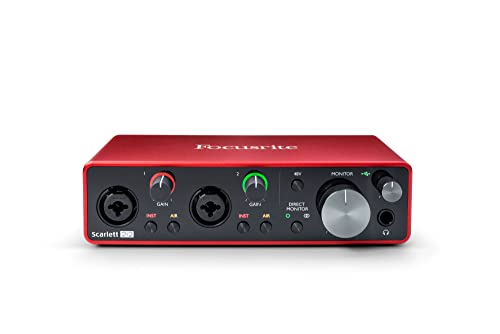
Audio interface with phantom power Condenser microphones (AT2020, AKG P120, MXL 990) require 48V phantom power. Budget audio interfaces like the Focusrite Scarlett Solo (£89 / $109) or PreSonus AudioBox USB 96 (£89 / $99) provide this. Dynamic mics (SM57, SM58) work with any interface but benefit from clean preamps.
 |  |  |  |  |
$299.00 | $195.90 | $224.99 | $95.07 | $43.90 |
Pop shield for vocal recordings Essential for all vocal recordings to manage plosives (P and B sounds). Position 5-10cm in front of the microphone. Budget options (£10-15) work as effectively as expensive models.
Boom arm or microphone stand Desktop boom arms (£30-50) provide positioning flexibility. Floor stands (£20-40) suit dedicated recording spaces. Ensure weight capacity matches your microphone.
XLR cable Quality XLR cables (£15-25 for 3m) maintain signal integrity. Avoid ultra-cheap cables that introduce noise and fail quickly.
Acoustic treatment Basic acoustic panels (£50-100 for starter pack) control reflections significantly. Even hanging heavy blankets behind your mic improves recordings. Full acoustic treatment matters more than expensive microphones for studio-quality recordings.
Optional but recommended
Shock mount Reduces vibrations and handling noise, particularly important for condenser microphones. Essential if recording in environments with floor vibrations or desk movement.
Headphones Closed-back headphones prevent audio bleed into the microphone during recording. Open-back models suit mixing but not tracking.
Dynamic vs condenser microphones explained
Dynamic microphones (SM57, SM58)
How they work: Moving coil generates electrical signal from sound pressure. Robust design withstands high SPL and physical impacts.
Best for:
- Recording loud sources (guitar amps, drums)
- Live performance
- Environments without acoustic treatment
- Budget setups (no phantom power needed)
Advantages:
- No phantom power required
- Handles high SPL without distortion
- Extremely durable construction
- Less sensitive to room noise
- Works in humid environments
Limitations:
- Less detailed high-frequency response
- Lower sensitivity requires strong preamps
- Less suited to quiet, detailed sources
Condenser microphones (AT2020, AKG P120, MXL 990)
How they work: Capacitor design captures detailed transients and extended frequency response. Requires 48V phantom power from audio interface.
Best for:
- Studio vocal recordings
- Acoustic instruments
- Detail-oriented recordings
- Treated recording spaces
Advantages:
- Extended frequency response captures detail
- Superior transient response
- Greater sensitivity captures quiet sources
- Wider dynamic range
Limitations:
- Requires 48V phantom power
- More sensitive to room noise
- Less durable than dynamic mics
- Higher sensitivity to humidity
Which type should you choose?
Choose dynamic mics if you:
- Record loud sources (amps, drums)
- Perform live regularly
- Have untreated recording space
- Need indestructible reliability
Choose condenser mics if you:
- Focus on vocal recordings
- Record acoustic instruments
- Have treated or quiet recording space
- Prioritise detail and accuracy
Recording tips for better results
Understanding proximity effect
The proximity effect boosts bass frequencies when close to cardioid microphones. This affects all microphones on this list.
Optimal distances:
- Vocals: 15-20cm for balanced tone
- Closer (10-15cm): Adds warmth and intimacy
- Further (20-30cm): Reduces bass, increases room ambience
Managing proximity effect:
- If available, use bass-cut filter when too close
- Move back if vocals sound muddy or boomy
- Experiment with distance to find your sweet spot
Microphone placement techniques
Vocals: Position microphone slightly above mouth level, angled downward. This reduces plosives and captures natural tone. Use pop shield 5-10cm from capsule.
Acoustic guitar: Point microphone at 12th fret from 20-30cm distance. Closer captures more body, further captures more room tone. Experiment with angle for desired brightness.
Electric guitar amps: Position mic directly on speaker grille, slightly off-centre from dust cap. Moving toward edge reduces brightness. Distance from grille affects thickness – close (1-2cm) sounds aggressive, further (10-15cm) captures room.
Drums (snare): Position mic 2-5cm above rim, angled toward centre. Adjust angle for more attack (centre) or body (edge).
Gain staging fundamentals
Set levels properly:
- Aim for peaks around -12dB to -6dB
- Never allow signals to reach 0dB (causes distortion)
- Start with low gain, increase gradually whilst monitoring
Condenser microphones: Less gain required due to high sensitivity. Watch for clipping on loud vocals.
Dynamic microphones: Require more preamp gain. Ensure your audio interface provides sufficient clean gain (50dB+) for optimal results.
Room acoustic considerations
Basic acoustic treatment improves recordings more than expensive gear:
- Hang acoustic panels or heavy blankets behind microphone
- Record vocals facing into room corner (reduces reflections)
- Add panels at first reflection points
- Consider recording in wardrobe for isolation
Without acoustic treatment:
- Dynamic mics (SM57, SM58) reject more room noise
- Position microphone closer to reduce room reflections
- Record in smallest, quietest room available
Noise suppression techniques
Reduce unwanted noise:
- Turn off air conditioning and fans during recording
- Silence mobile phones and computers
- Record during quietest time of day
- Use dynamic mics in noisy environments
Post-recording:
- Gentle high-pass filter removes low-frequency rumble
- Noise reduction plugins clean background hiss
- Gate plugins reduce noise between phrases
Which microphone should you buy?
Best overall choice
For most home studios: The Audio-Technica AT2020 (£89 / $119) offers the best balance of sound quality, versatility, and value. It handles vocal recordings and acoustic instruments with professional clarity.
By use case
Recording electric guitar amps and drums: The Shure SM57 (£99 / $119) remains the industry standard. Its ability to handle extreme SPL and capture aggressive transients makes it essential for rock ‘n’ roll recording.
Live performance and studio vocals: The Shure SM58 (£99 / $119) delivers reliable performance across both applications. The built-in shock mount reduces handling noise for mobile vocalists.
Warm vocal character on a budget: The AKG P120 (£99 / $129) provides warmth and detail with switchable bass-cut and pad features for flexibility.
Tightest budget (under £80): The MXL 990 (£59 / $79) delivers impressive sound quality at an entry-level price point. Best value for vocal recordings.
By experience level
Complete beginners: Start with the Audio-Technica AT2020 for versatility or the Shure SM58 if you need live performance capability immediately.
Intermediate home studios: The combination of SM57 (instruments/amps) and AT2020 (vocals/acoustics) covers most recording scenarios comprehensively.
Building microphone collection: Add the SM57 and SM58 dynamic mics first (indestructible utility), then the AT2020 condenser for detailed vocal work.
Complete comparison table
| Feature | AT2020 | SM57 | SM58 | AKG P120 | MXL 990 |
|---|---|---|---|---|---|
| Type | Condenser | Dynamic | Dynamic | Condenser | Condenser |
| Price | £89 / $119 | £99 / $119 | £99 / $119 | £99 / $129 | £59 / $79 |
| Polar Pattern | Cardioid | Cardioid | Cardioid | Cardioid | Cardioid |
| Frequency Response | 20Hz-20kHz | 40Hz-15kHz | 50Hz-15kHz | 20Hz-20kHz | 30Hz-20kHz |
| Max SPL | 144dB | 180dB | 180dB | 150dB | 130dB |
| Self-Noise | 20dB-A | N/A | N/A | 15dB-A | 20dB-A |
| Phantom Power | Required | Not required | Not required | Required | Required |
| Switchable Features | None | None | None | Bass-cut, -20dB pad | None |
| Best For | Versatile home studios | Guitar amps & drums | Live & studio vocals | Warm vocal tone | Budget vocal warmth |
| Sound Character | Detailed, accurate | Punchy, present | Bright, clear | Warm, smooth | Warm, rich |
| Durability | Good | Exceptional | Exceptional | Good | Good |
Final recommendations
Finding quality microphones under £150 / $150 doesn’t mean compromising on sound. The five microphones on this list prove you can achieve studio-quality recordings without the studio-level prices.
The Audio-Technica AT2020 earns its spot as best overall choice because it handles almost everything you throw at it – vocals, acoustic guitar, even room miking. For under £90 / $120, you’re getting a microphone that rivals options costing twice as much. If you’re building your first home studio and can only afford one mic, this is it.
The Shure SM57 remains legendary for good reason. Point it at a cranked guitar amp or aggressive snare drum and it captures the energy without flinching. I’ve seen these mics survive decades of abuse in professional studios. If you record electric instruments or drums, you need one of these. No debate.
For vocals, both the SM58 (live focus) and AKG P120 (warm studio tone) deliver excellent results. The SM58 works brilliantly as a backup studio mic when you need something bulletproof, whilst the P120 adds flattering warmth to vocal recordings. The MXL 990 punches ridiculously above its £59 / $79 price point – remarkable value if budget is tight.
Here’s the truth: your recording environment matters more than your microphone once you spend a decent amount. An AT2020 in a treated room with proper technique outperforms a £500 microphone in a reflective bedroom with poor placement. Invest in a decent audio interface (Focusrite Scarlett or PreSonus AudioBox USB 96 both work brilliantly), grab a pop shield, and hang some heavy blankets or acoustic panels behind your mic position.
The combination of proper gain staging, optimal microphone placement, and basic room control transforms these budget microphones into professional tools. You’re not sacrificing quality at these price points – you’re making smart decisions that leave budget for other essentials like your audio interface, cables, and acoustic treatment.
Start with the AT2020 if you need versatility, or the SM57 if instruments are your focus. Add the other as your second microphone and you’ll cover 90% of home recording scenarios.
These microphones have captured countless hit records – they’ll handle your demos and releases without breaking a sweat.
