


Table of Contents
Studio headphones need to reveal mix problems, not hide them. This guide covers ten tested models for tracking and mixing at home, from budget workhorses under £100 to professional references around £400.
Best for: Home studio producers and sound engineers who need accurate monitoring without dedicated room treatment.
Price range: ~£99 to ~£500 / ~$99 to ~$600
The right pair of studio headphones will show you issues your room acoustics might hide and help you craft recordings that translate well across different playback systems.
Quick comparison table
| Model | Type | Impedance | Best for | Price |
|---|---|---|---|---|
| Audio-Technica ATH-M50x | Closed | 38Ω | Tracking, general monitoring | ~£150 / ~$179 |
| Sony MDR-7506 | Closed | 63Ω | Vocal tracking, broadcast | ~£99 / ~$99 |
| Beyerdynamic DT 100 | Closed | 400Ω | Isolation, durability | ~£175 / ~$225 |
| Sennheiser HD 650 | Open | 300Ω | Mixing, mastering | ~£350 / ~$400 |
| AKG K371 | Closed | 32Ω | Budget reference, Harman Curve | ~£130 / ~$150 |
| Shure SRH840 | Closed | 44Ω | Critical listening | ~£150 / ~$179 |
| Focal Listen Professional | Closed | 32Ω | Portable mixing | ~£250 / ~$299 |
| Neumann NDH 20 | Closed | 150Ω | Studio integration | ~£450 / ~$500 |
| HIFIMAN Sundara | Open | 37Ω | Detailed mixing, planar sound | ~£229 / ~$299 |
| Bose QuietComfort 35 II | Closed (ANC) | N/A | Reference listening only | ~£230 / ~$279 |
1) Audio-Technica ATH-M50x
Best for: Tracking vocals and instruments, general studio monitoring
Price: ~£150 / ~$179
The ATH-M50x has become a trusted companion for tracking sessions in home studios worldwide. The 45mm drivers deliver accurate audio delivery across the frequency range, from 15Hz sub-bass through to 28kHz highs, covering the full audible spectrum with room to spare.
 Audio-Technica ATH-M50x
 The Audio-Technica ATH-M50x delivers accurate audio across the frequency range with solid passive noise reduction. The 45mm drivers and detachable cable system make it a trusted tracking companion for home studios.
- 45mm drivers deliver accurate frequency response from 15Hz to 28kHz
- Solid passive noise reduction keeps backing tracks from bleeding into mics
- Detachable cable system means repairs cost £15 not £150
- Swivelling ear cups enable easy one-ear monitoring
- Sound signature isn't ruler-flat with slight low-mid emphasis
- May feel snug on larger heads initially
- Better for tracking than critical mixing decisions
- Cross-reference with monitors for final mix checks
The closed-back design provides solid passive noise reduction, keeping backing tracks from bleeding into vocal microphones during recording. Sound engineers appreciate the honest midrange reproduction, which reveals sibilance and proximity effect issues that cheaper headphones mask.
The build quality holds up to daily studio use. The swivelling ear cups make one-ear monitoring easy during takes, and the detachable cable system means a broken lead costs £15 to fix rather than £150 for new headphones.
A minor nitpick: the sound signature isn’t ruler-flat, with a slight emphasis in the low-mids. For critical mixing decisions, cross-reference with your studio monitors. For tracking and general reference work, they punch well above their price.
The retention memory foam earpads stay comfortable during long sessions, though they may feel snug on larger heads initially. They loosen slightly after a few weeks of use.
2) Sony MDR-7506
Best for: Vocal tracking, broadcast monitoring, catching mix problems fast
Price: ~£99 / ~$99
The Sony MDR-7506 has been a studio staple since the early 1990s. Walk into almost any professional studio or broadcast facility, and you’ll spot a pair hanging on a hook. There’s a reason sound engineers keep coming back to these after three decades.
 Sony MDR-7506 Headphones
 The Sony MDR-7506 headphones feature 40mm drivers for clear, balanced sound, making them ideal for studio mixing and home recording. Their closed-ear design provides effective noise isolation, while the foldable, durable build ensures comfort during long sessions. With a 9.8-foot non-detachable cord, they're versatile for various audio sources.
- Bright analytical sound reveals sibilance and harshness immediately
- 40mm drivers offer good transient response for consonants and attacks
- Flat response reveals mix problems that forgiving headphones hide
- Closed back design reduces bleed during tracking and isolates you from room noise
- Metal construction and proven durability across decades of studio use
- 63-ohm impedance works with interfaces, amps, and mobile devices without struggling
- Lightweight at 230g for extended studio mixing sessions
- Consistent sound signature across units makes them reliable for reference
- Foldable design with included pouch suits mobile audio engineers
- Faux leather ear pads deteriorate faster than the rest of the headphones and need replacing every 12-18 months
- Fixed cable can't be replaced if damaged
- Soundstage narrower than open-back alternatives
- Coiled cable adds weight and can tug when moving around
- Isolation not as strong as dedicated isolation headphones
- Bright signature can be fatiguing for some users
The sound signature is bright and analytical, with extended highs that reveal harshness and sibilance immediately. This isn’t the most enjoyable headphone for casual listening, but that’s precisely the point: they’re a diagnostic tool for tracking vocals and catching problems before they become permanent.
The 40mm drivers offer good transient response, helping you hear pick attacks, consonants, and drum transients with clarity. Instrument separation sits in respectable territory for a closed-back design at this price.
The passively isolating fit blocks enough ambient noise for tracking work, though dedicated isolation headphones offer more attenuation. The coiled cable stretches when you need to move and stays tidy otherwise.
At under £100, these represent exceptional value. The ear pads are the only consumable part; replacements cost around £15, and the headphones themselves survive years of studio abuse.
3) Beyerdynamic DT 100
Best for: Maximum noise isolation, broadcast, indestructible durability
Price: ~£175 / ~$225
The Beyerdynamic DT 100 has been the broadcast and studio monitoring standard for decades. Paul McCartney, Roger Waters, and Björk have all been photographed wearing these utilitarian workhorses. They’re not pretty, but they’re virtually indestructible.
 Beyerdynamic DT 100 Headphones
 The Beyerdynamic DT 100 Studio Headset features excellent durability, sound isolation, and clear audio reproduction, making it ideal for tracking vocals and instruments in studio environments. With a 400 Ohm impedance, it requires adequate power to drive, while its detachable cable and comfortable ear pads enhance practicality for long sessions.
- Exceptional passive noise reduction for tracking in noisy environments
- Every component is user-replaceable for decades of service
- Midrange focus works well for speech and vocal monitoring
- Virtually indestructible build quality
- Heavy at 350g with industrial aesthetics
- Proprietary square connector is unusual
- Better for tracking than recreational listening
- 400 ohm impedance requires headphone amplifier
The closed-back design delivers exceptional passive noise reduction, sealing out ambient sound more effectively than most competitors. This makes them ideal for tracking in noisy environments or when vocalists need high monitoring levels without bleed.
At 400 ohms impedance, the DT 100 demands a proper headphone amplifier or professional audio interface with sufficient output. Plugging these into a laptop headphone jack won’t give you adequate volume or control. The 80-ohm version works better for portable use if you need flexibility.
The frequency response (30Hz to 20kHz) covers the audible spectrum accurately, with a midrange focus that works well for speech and vocal monitoring. The sound signature emphasises clarity over bass weight, making them better for tracking than recreational listening.
Every component is user-replaceable, from the Softskin ear cushions to the headband padding to the detachable cable. Studios buy these knowing they’ll last for decades with basic maintenance. The square proprietary connector is unusual but locks firmly in place.
Build quality prioritises function over form. These are heavy (350g) and look like Cold War-era equipment, but they handle the roughest treatment studios can deliver.
4) Sennheiser HD 650
Best for: Mixing, mastering, critical listening with a headphone amplifier
Price: ~£350 / ~$400
The Sennheiser HD 650 has earned legendary status among audio professionals for good reason. The neutral sound reproduction reveals mix details that closed-back headphones can obscure.
 Sennheiser HD 650
 The Sennheiser HD 650 has earned legendary status among audio professionals. The open-back design creates natural soundstage with excellent instrument separation and 0.05% THD for transparent reproduction.
- Neutral sound reproduction reveals mix details accurately
- Open-back design creates natural soundstage with excellent separation
- 0.05% THD means transparent reproduction without colouration
- Velour ear cushions remain comfortable during 8-hour sessions
- 300 ohm impedance requires dedicated headphone amplifier
- Open-back design not suitable for tracking
- Premium price requires additional amp investment
- Sound leaks in both directions
The open-back design creates a natural soundstage with excellent instrument separation. Panning decisions become clearer, and stereo imaging feels more like listening to speakers than headphones. This spatial accuracy makes the HD 650 a genuine mixing tool rather than just a playback device.
At 300 ohms impedance, these require a dedicated headphone amplifier to perform their best. Running them from a basic audio interface headphone output won’t reveal their full capability. Budget £100-200 for a decent amp if you don’t already own one.
The total harmonic distortion sits at 0.05%, meaning the drivers reproduce audio cleanly without adding colouration. This transparency lets you hear your mix accurately, not a flattering interpretation of it.
The memory foam ear cushions with velour covering remain comfortable during eight-hour sessions. The aluminium voice coils and dynamic drivers feel solid and professional.
One limitation: the open-back design means sound leaks in both directions. These aren’t suitable for tracking, where your backing track would bleed into the microphone. Reserve them for mixing and mastering work.
5) AKG K371
Best for: Budget-conscious producers wanting reference-quality tuning
Price: ~£130 / ~$150
The AKG K371 professional studio headphones offer something unusual at this price: tuning based on the Harman Curve research. This target response was developed through extensive listening tests to determine what most people perceive as neutral and natural-sounding.
 AKG K371
 The AKG K371 offers Harman Curve tuning at an accessible price. The 50mm drivers deliver tight bass, clear mids, and extended highs that translate well to other playback systems.
- Harman Curve tuning for natural-sounding response
- 32 ohm impedance works with any interface or mobile device
- Folding design practical for mobile recording
- Three detachable cables included
- Build quality good but not exceptional for price
- Less established reputation than competitors
- Ear cups can feel warm during long sessions
- Sound signature may be too neutral for some tastes
The result is a neutral sound profile for accurate audio that splits the difference between clinical accuracy and musical enjoyment. The 50mm drivers deliver tight bass without the bloat that plagues many closed-back designs, clear mids for vocal work, and extended highs that reveal detail without fatigue.
The closed-back design provides good passive noise reduction for tracking, keeping your backing track out of the microphone. The comfortable and portable folding design makes these practical for mobile recording as well as studio use.
At 32 ohms impedance, the K371 works well with any audio interface or even mobile devices. You don’t need a headphone amplifier to drive these properly.
Build quality feels solid for the price. The detachable cables (three lengths included) mean a broken lead doesn’t require new headphones. The ear cups rotate and fold flat for transport.
For singer-songwriters setting up a first home studio, the K371 offers serious value as both tracking and mixing headphones. The Harman-tuned response translates well to other playback systems.
6) Shure SRH840
Best for: Critical listening, vocal tracking, balanced monitoring
Price: ~£150 / ~$179
The Shure SRH840 professional monitoring headphones deliver the kind of balanced frequency response that makes mixing decisions easier. The sound signature sits between analytical and musical, revealing problems without becoming fatiguing.
 Shure SRH840A
 The Shure SRH840A delivers balanced frequency response between analytical and musical. The closed-back design provides good isolation for vocal sessions with comfort that lasts hours.
- Balanced frequency response for easier mixing decisions
- Closed-back design keeps backing tracks from bleeding into mics
- Comfortable for hours without pressure points
- Detachable cable practical when space is tight
- Design less exciting than some alternatives
- Not dramatically better than cheaper options
- Ear pads require periodic replacement
The closed-back design keeps backing tracks from bleeding into microphones during vocal sessions. Noise isolation works well for home recording environments where you can’t control every ambient sound.
The frequency response feels balanced across the range. Mids come through clearly for vocal work, bass stays tight and defined, and highs extend without becoming harsh or piercing during long sessions.
Comfort matters when you’re recording take after take. The SRH840 sits nicely for hours without creating pressure points. The ear cups don’t squeeze excessively.
Build quality impresses for the price. After five years of regular use, a well-maintained pair still performs reliably. The detachable cable is practical when space is tight or when you need to replace a worn lead.
At around £150, these deliver pro sound at a sensible price. They’re a solid choice for producers who want capable all-rounders without breaking the budget.
7) Focal Listen Professional
Best for: Portable mixing, semi-open sound character from a closed design
Price: ~£250 / ~$299
Focal’s exclusive cone technology delivers acoustic transparency that approaches semi-open headphones while maintaining the isolation of a closed-back design. This hybrid character makes them versatile for both tracking and mixing.
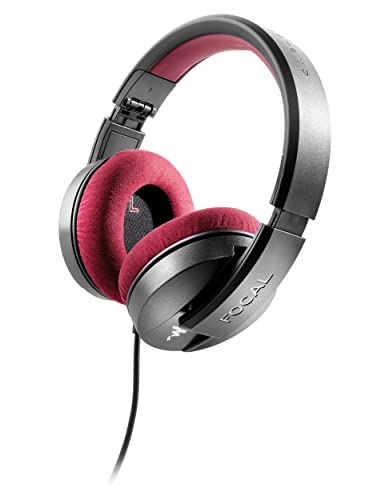 Focal Listen Professional
 Focal's exclusive cone technology delivers acoustic transparency approaching semi-open headphones while maintaining closed-back isolation. Quick transient response helps you hear pick attacks and drum hits clearly.
- Acoustic transparency approaches semi-open sound
- Quick transient response reveals pick attacks and consonants
- Lightweight build keeps comfort high during mixing
- Included carrying case practical for mobile work
- Higher price than budget alternatives
- Isolation less than fully closed designs
- Headband can get uncomfortable after prolonged use
- Premium pricing for the closed-back category
The frequency response handles the full audible spectrum accurately. Bass lands where it should without overwhelming the mids. Highs sparkle without becoming harsh or fatiguing during extended sessions.
Focal designed these for transparent sound reproduction, and they deliver. Transient response feels quick and accurate, helping you hear pick attacks, drum hits, and vocal consonants clearly.
The lightweight build keeps them comfortable during long mixing sessions. The included carrying case makes them practical for mobile recording work where you need to check mixes outside the studio.
The higher price compared to budget options reflects the engineering quality. If you can stretch the budget, these offer meaningful improvements in clarity and instrument separation.
8) Neumann NDH 20
Best for: Studio integration with Neumann monitors, professional mixing
Price: ~£450 / ~$500
The Neumann NDH 20 represents Neumann’s first headphone, bringing their microphone and monitor expertise to personal monitoring. The same company behind the legendary Neumann KU 100 binaural recording head and KH studio monitor series designed these for professional use.
 Neumann NDH 20
 The Neumann NDH 20 brings microphone and monitor expertise to personal monitoring. The sound imaging resembles Neumann's studio monitors, making transitions between speakers and headphones less jarring.
- Sound imaging resembles Neumann studio monitors
- Balanced frequency response without mid-frequency peaks
- Memory foam earpads keep comfort high during long sessions
- Professional build designed for daily studio use
- 150 ohm impedance benefits from headphone amplifier
- Premium pricing at ~£450
- Overkill for beginners or budget setups
- Weight slightly heavier than some competitors
The closed-back design delivers what might be called “studio honesty”: balanced audio delivery through the entire frequency range without mid-frequency peaks that throw off mixing decisions. The detailed sound imaging resembles Neumann’s studio monitors, making transitions between speakers and headphones less jarring.
At 150 ohms impedance, the NDH 20 benefits from a dedicated headphone amplifier or high-quality interface output. Running them from a basic laptop won’t reveal their full capability.
The large retention memory foam earpads keep comfort high during extended sessions. The closed design provides solid passive noise reduction while you work.
Build quality feels professional throughout. These aren’t cheap, but they’re designed for daily studio use over many years. The investment makes sense for producers who want headphone monitoring that matches their existing Neumann setup.
9) HIFIMAN Sundara
Best for: Detailed mixing, producers wanting planar magnetic sound
Price: ~£229 / ~$299
The HIFIMAN Sundara brings planar magnetic drivers to an accessible price point. Unlike conventional dynamic drivers, planar drivers are quick and musical, offering exceptional transient response that helps reveal subtle timing and texture details.
 HIFIMAN Sundara
 The HIFIMAN Sundara brings planar magnetic drivers to an accessible price point. The open-back design creates wide natural soundstage with exceptional transient response for revealing timing and texture details.
- Planar magnetic drivers offer exceptional transient response
- Wide natural soundstage with excellent instrument separation
- Tight controlled bass without bloom
- 37 ohm impedance works with most interfaces
- Open-back design not suitable for tracking
- Sound leaks freely in both directions
- Still benefits from quality headphone amplifier
- HIFIMAN quality control concerns reported by some
The open-back design creates a wide, natural soundstage with excellent instrument separation. Panning decisions become clearer, and stereo imaging feels three-dimensional rather than confined inside your head.
At around £229, the Sundara brings high-end audio concepts down to earth. The planar magnetic drivers deliver tight, controlled bass without the bloom that some dynamic drivers produce. Mids carry tremendous detail for catching vocal nuances.
The 37-ohm impedance means these work with most audio interfaces, though they still benefit from a quality headphone amplifier for optimal performance. The lightweight build keeps them comfortable during marathon mixing sessions.
The frequency response stays fairly neutral across the audible spectrum, making these versatile for mixing various genres. Build quality holds up well for the price.
One consideration: the open-back design means sound leaks freely. These aren’t suitable for tracking work where isolation matters. Reserve them for mixing and critical listening.
10) Bose QuietComfort 35 II
Best for: Reference listening and travel only (not recommended for mixing)
Price: ~£230 / ~$279
The Bose QuietComfort 35 II offers exceptional active noise cancellation and comfort, but Bose headphones aren’t suitable for mixing and mastering. They colour the sound too much for production work.
 Bose QuietComfort 35 II
 The Bose QuietComfort 35 II offers exceptional active noise cancellation for reference listening and travel. Not recommended for mixing due to coloured sound signature, but useful as a consumer check device.
- Exceptional active noise cancellation for travel
- 20-hour battery life handles long flights
- Extremely comfortable for extended wear
- Useful as consumer reference check device
- Not suitable for mixing or mastering decisions
- Coloured sound signature hides mix problems
- Poor value specifically as studio tools
- Frequency response not flat enough for production
For reference listening and blocking out the world while travelling, they excel. The 20-hour battery life handles long flights, and the built-in voice assistant provides hands-free control.
Sound quality is good for consumer listening, with tight bass, but the frequency response isn’t flat enough for making mixing decisions. Use these for checking how your mix sounds on consumer headphones, not for creating the mix itself.
Comfort is exceptional. The lightweight design and soft ear cushions work for hours without fatigue. For songwriters who travel frequently and want to listen to reference tracks or work on arrangements, they’re practical companions.
If you already own these for travel, they have a role in your workflow as a “consumer check” device. Just don’t make critical mixing decisions based on what you hear through them.
Key features to consider
When choosing headphones for home studios, four factors matter most: sound accuracy, comfort for long sessions, driver design, and impedance matching with your gear.
Sound quality and frequency response
Flat frequency response is essential for production work. You need headphones that reveal your mix accurately, covering the full audible spectrum (20Hz to 20kHz) without colouration.
Look for minimal peaks and dips in the response curve and low total harmonic distortion (under 0.1% THD keeps things clean). The Audio-Technica ATH-M20x delivers clarity without breaking the budget.
Some manufacturers tune their headphones to the Harman Curve, a research-based target response that most listeners perceive as natural. The AKG K371 follows this approach.
Comfort and build quality
Long mixing sessions demand comfortable headphones. Memory foam ear pads make a significant difference during extended work.
Key comfort features include adjustable, padded headbands, lightweight designs (under 350g), and replaceable parts for longevity. If your ears hurt after two hours, you won’t use those headphones for critical work.
Build quality determines how long your investment lasts. Good headphones should survive years of daily use. Look for solid joints, durable cables (preferably detachable), and user-replaceable ear pads.
Open-back vs closed-back vs semi-open
Your choice depends on your working environment and primary use case.
- Open-back headphones like the Sennheiser HD 650 and HIFIMAN Sundara offer natural soundstage, excellent instrument separation, and accurate stereo imaging. Sound leaks in both directions, making them unsuitable for tracking but excellent for mixing and mastering in quiet environments.
- Closed-back headphones like the Sony MDR-7506 and Beyerdynamic DT 100 provide strong passive noise reduction, keeping backing tracks from bleeding into microphones. Bass response often feels punchier. These are essential for tracking work and useful in noisy environments.
- Semi-open headphones split the difference, offering some spatial qualities of open-backs with better isolation than fully open designs. The Focal Listen Professional approaches this character while technically being closed-back.
Impedance and headphone amplifiers
Impedance matching ensures your headphones perform correctly with your equipment.
- Low impedance (32-80 ohms): Works with phones, laptops, and basic audio interfaces. Needs less power. Good for portable use.
- High impedance (250-600 ohms): Requires a dedicated headphone amplifier or professional interface with strong headphone output. Offers better driver control and often cleaner sound when properly powered.
Most home audio interfaces handle headphones in the 80-250 ohm range comfortably. Check your interface specifications before buying high-impedance headphones like the 400-ohm Beyerdynamic DT 100.
Tips for getting the most from your headphones
Creating an optimal listening environment
Even with headphones bypassing your room acoustics, your environment still matters more than you might expect. Background noise interferes with critical listening, so find the quietest spot available and switch off fans, air conditioning, and anything else humming away while you make important mixing decisions.
Soft furnishings like carpets, curtains, and cushions help absorb reflections that can colour what you hear, and you’ll want to avoid sitting directly against walls where bass tends to build up. It’s worth noting that temperature affects your hearing sensitivity too — keeping your studio around 20°C helps maintain consistent monitoring conditions.
The goal isn’t acoustic perfection; it’s consistency. When your listening environment stays the same from session to session, you learn to trust what you’re hearing.

Proper headphone maintenance
A bit of regular care keeps your headphones sounding their best and lasting for years. Wiping down the ear pads after sessions removes the sweat and oils that break down materials over time, and you should plan to replace the pads every 12-18 months depending on how heavily you use them. Fresh pads restore both comfort and the proper seal you need for accurate bass response — most manufacturers sell replacements for around £15-30.
Cables deserve attention too. Avoid tight wrapping or yanking, and use loose coils with cable ties rather than knots to prevent the internal wire breaks that eventually kill otherwise healthy headphones. When you’re not using them, store your headphones on a stand or in a hard case to protect the headband shape, and keep volumes reasonable to avoid stressing the drivers.
Adjusting fit for extended sessions
Getting the fit right affects both comfort and sound quality. Start with the headband, positioning it on top of your head so the weight distributes evenly without the cups sliding forward or back. The ear pads should seal completely around your ears rather than pressing on them — any gaps will leak bass and reduce isolation.
Clamping force is a balancing act: too tight causes headaches during long sessions, while too loose creates gaps and lets the headphones slip. Most models loosen slightly over the first few weeks of use, so give them time to break in before judging. If you wear glasses, look for headphones with softer pads and lighter clamping, since frames can break the seal and affect bass response.
Finally, take breaks every 45-60 minutes. Your ears need rest to maintain their accuracy, and pushing through fatigue leads to poor mixing decisions you’ll regret tomorrow.

Final verdict
For most home studios, the Sony MDR-7506 offers unbeatable value for tracking and diagnostic listening at ~£99. Add the AKG K371 (~£130) for a more musical alternative with Harman Curve tuning.
If you can stretch the budget, the Sennheiser HD 650 (~£350) with a decent headphone amplifier provides serious mixing capability. For indestructible durability and maximum isolation, the Beyerdynamic DT 100 (~£175) remains the broadcast industry standard.
The best headphones are ones you’ll actually use for critical listening. Prioritise comfort and accuracy over features you won’t need.
It depends on your headphones’ impedance. Low-impedance models (32–80 ohms) such as the AKG K371 work fine with most audio interfaces. High-impedance headphones (250+ ohms) including the Beyerdynamic DT 100 or Sennheiser HD 650 benefit from dedicated amplification.
If your headphones sound quiet or lack bass when plugged into your interface, you likely need more power. Expect to spend £100–200 on a capable headphone amp.
Closed-back headphones are best for tracking vocals and instruments because they prevent click-track or backing-track bleed into microphones.
Open-back headphones are ideal for mixing and mastering thanks to better stereo imaging and instrument separation, but require a quiet space.
Many producers use both: closed-back for tracking, open-back for mixing.
The Harman Curve is a scientifically derived target frequency response based on extensive listener testing. Headphones tuned to this curve typically sound natural and translate well to real-world playback systems.
The AKG K371 follows the Harman tuning closely. It’s a useful benchmark, but personal preference and intended use also matter.
Yes. Good mixes are achievable on headphones, especially with practice. The two main challenges are exaggerated stereo width and inconsistent bass response.
Cross-check your mixes on multiple systems—car speakers, earbuds, laptop speakers—and use pro reference tracks to calibrate your ears.
Headphones are often more accurate than untreated rooms, which makes them a practical option for home studios.
Most ear pads last around 12–24 months with regular use. Replace them when they flatten, crack, or stop sealing properly.
Worn pads affect comfort, bass response, and isolation. Replacement pads usually cost £15–30.
For maximum compatibility with laptops, phones, and audio interfaces, choose 32–80 ohm headphones.
Higher-impedance models (250+ ohms) can sound better when properly powered but require a capable headphone amp or strong interface output.
Always check your interface’s headphone output specs before buying high-impedance headphones.
Mid-range headphones (£100–200) offer the best value for home studios. They provide meaningful improvements in accuracy, build, and comfort compared with budget options.
Above £300, improvements tend to be more incremental. Professional models such as the Neumann NDH 20 are worthwhile for engineers who need extreme accuracy or specific tonal characteristics.
Start with a reliable mid-range model and upgrade once your needs become clearer.
Dynamic headphones use a voice coil and diaphragm similar to speakers. Planar magnetic headphones use a thin diaphragm with embedded conductors suspended between magnets.
Planar models typically offer faster transient response, improved detail, and more controlled bass. They often require more power but can deliver exceptionally accurate monitoring.
